

Dimitri can neither walk nor sit unaided
“Today, in terms of socialization, Dimitri is 13 years old. But he’s like a 5-year-old when it comes to speech, and between 6 months and 2 years old in other respects, since he can’t walk or sit without help”, explains Cédric, his father.
Dimitri was diagnosed with Pelizaeus-Merzbacher disease (PMD) at the age of 1. This was just as his mother Élodie and uncle Sébastien were discovering that they too were affected. The family moved house to create a special room for Dimitri: large rails in the ceiling allow him to be taken out of his bed, placed gently in his wheelchair, and taken to the toilet or shower.
Dimitri needs special care to help him grow and limit the progression of his disease: physiotherapy, psychomotricity, occupational therapy… His parents have found an Institut d’Éducation Motrice not far from their home. He sleeps there once a week, to avoid the fatigue of commuting. When he returns home, he is delighted to find his little brother Timéo, aged 5, spared from the disease.


Pelizaeus-Merzbacher Disease (PMD)
This rare genetic disease (1 child/100,000) of the leukodystrophy family is characterized by a permanent myelin deficiency in the brain.
Its most common symptoms are:
• pendular nystagmus (involuntary oscillatory eye movement),
• head tremor and hypotonia,
• developmental delay,
• spasticity (muscle contraction),
• variable intellectual deficit.
ELA launches an exceptional call for scientific projects on PMD
PMD is an ultra-rare disease, making it virtually impossible for researchers to obtain public or private research funding.
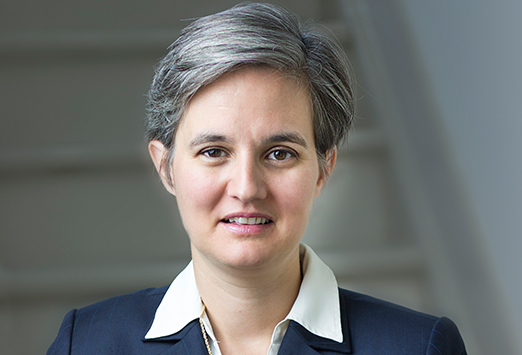
Adeline Vanderver is a specialist in leukodystrophies. She has contributed to a better understanding of a dozen different forms of the disease.
High hopes for researchers
“Thanks to these research projects, we will be able to define and understand the tools needed to measure the genetic mutations of women carrying the disease. We can also look forward to advances in the treatment of the difficulties faced by children affected by the disease, and envisage our response to these needs..”
Thanks to your donations, ELA plays a pivotal role, particularly in the early stages of leukodystrophy research.